

WhatsApp Payment Morocco 2026: SME Guide
Collect via WhatsApp in Morocco with secure links, 3D Secure, and BAM compliance. 2026 fintech guide for SMEs, set up in 5 minutes with DashyPay.

In Morocco, WhatsApp is the default sales channel for thousands of SMEs. WhatsApp payment Morocco means sharing a secure payment link in chat so customers pay by card in seconds, without leaving the conversation. This practical guide covers how payment via WhatsApp works, measurable benefits, ready-to-use message scripts, and security best practices.
How does WhatsApp payment work?
WhatsApp payment does not move money inside the app. WhatsApp is the communication layer; the actual payment happens on an encrypted checkout page (PCI-DSS, 3D Secure).
The flow:
- You discuss the order on WhatsApp (quote, reservation, custom request).
- You generate a payment link in DashyPay with amount and description.
- You paste the link in the chat with a short personalized message.
- The customer pays; you receive instant confirmation in your dashboard.
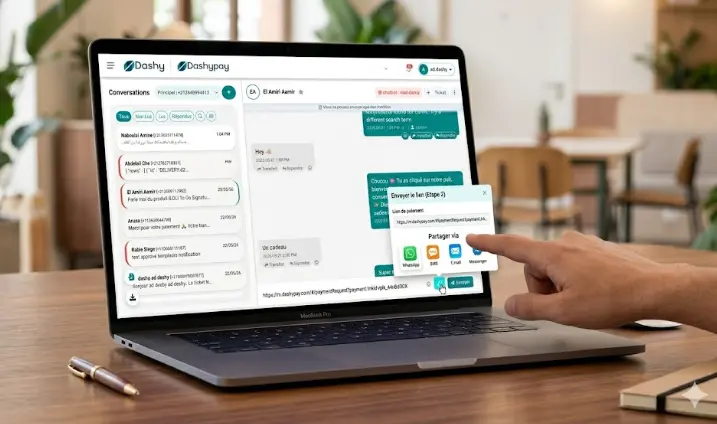
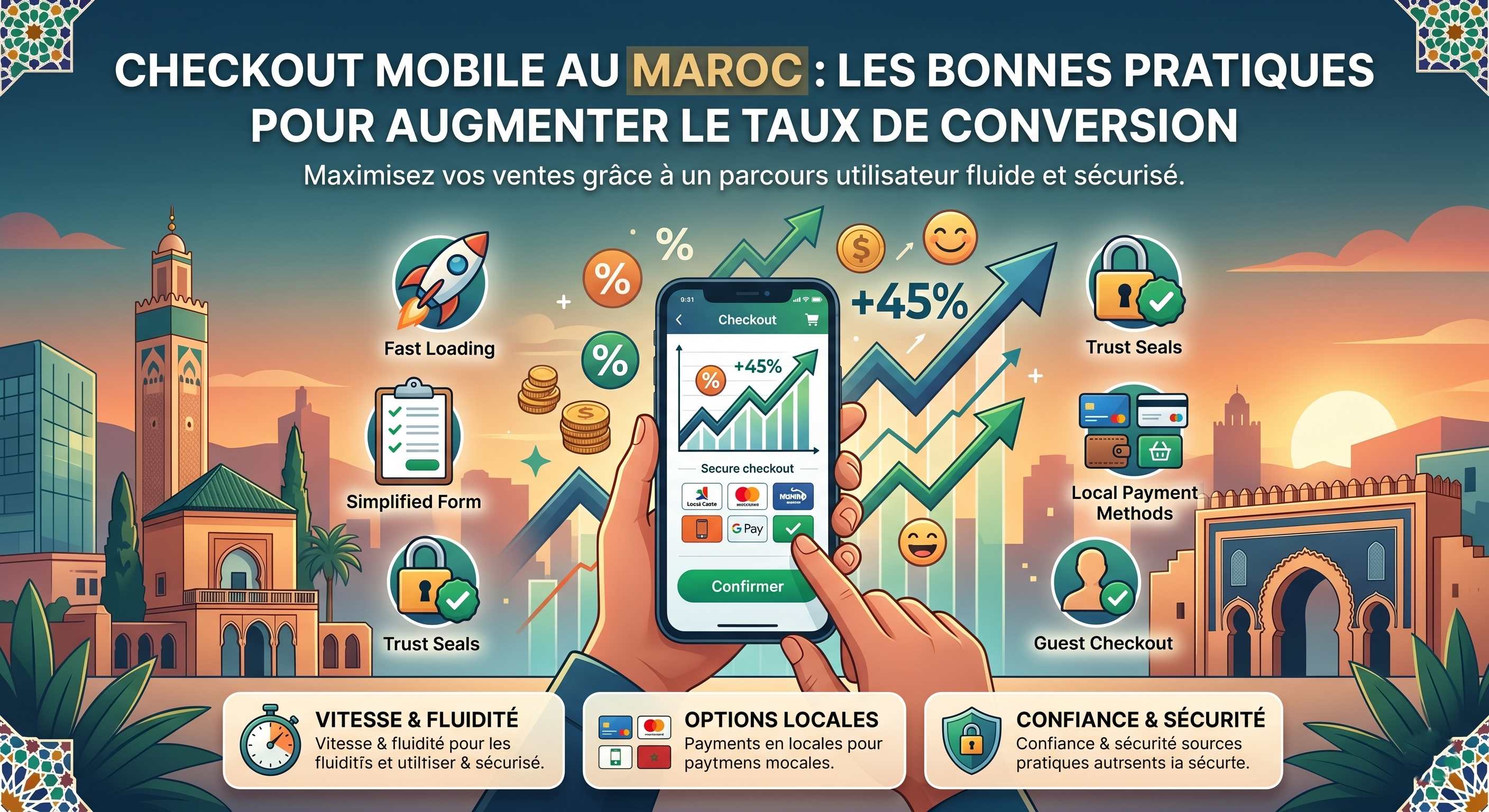
This combines WhatsApp proximity with bank-grade security—ideal for social commerce and remote sales across Morocco. Compared to email invoicing, industry benchmarks estimate WhatsApp Business read rates between 60% and 98% depending on message type and opt-in, well above email marketing (around 21% open rate).
Sources: Litmus Email Benchmarks (email); WhatsApp Business 60–98% estimates (Sinch, industry synthesis).
Benefits for your business
Higher conversion than email
A payment link sent on WhatsApp is seen and paid faster than email—because customers already live in the app and engagement on messaging beats inbox clutter for Moroccan SMEs.
Frictionless customer experience
Customers stay in a familiar app: one tap, card entry, done. Fewer steps mean fewer abandoned orders.
Lower acquisition cost
Sell where customers already are. No complex e-commerce build or heavy ad spend required to start collecting online.
Effective payment reminders
A friendly WhatsApp nudge often unlocks pending payments faster than formal email reminders.
Ready-to-use message scripts
Standardize your WhatsApp payment Morocco messages to look professional and save time:
- After order: “Hi [Name], here is your secure link to pay [amount] MAD for [order]. Thank you!”
- Deposit: “To confirm your booking, please pay the 30% deposit via this secure link.”
- Reminder (24h): “Hello [Name], your payment link is still open. Let me know if you need help completing it.”
- Confirmation: “Payment received—thank you! Your order is confirmed for [date/delivery].”
Step-by-step with DashyPay
Step 1: Create your DashyPay account
Sign up, complete your business profile, and start collecting the same day.
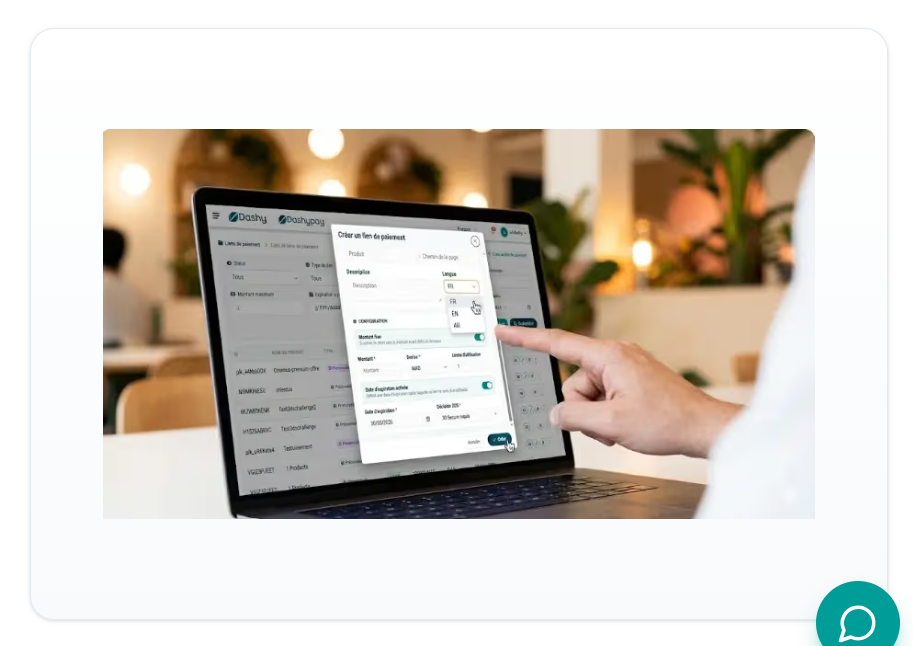
Step 2: Generate a payment link
Enter amount and description; save templates for recurring products or services.
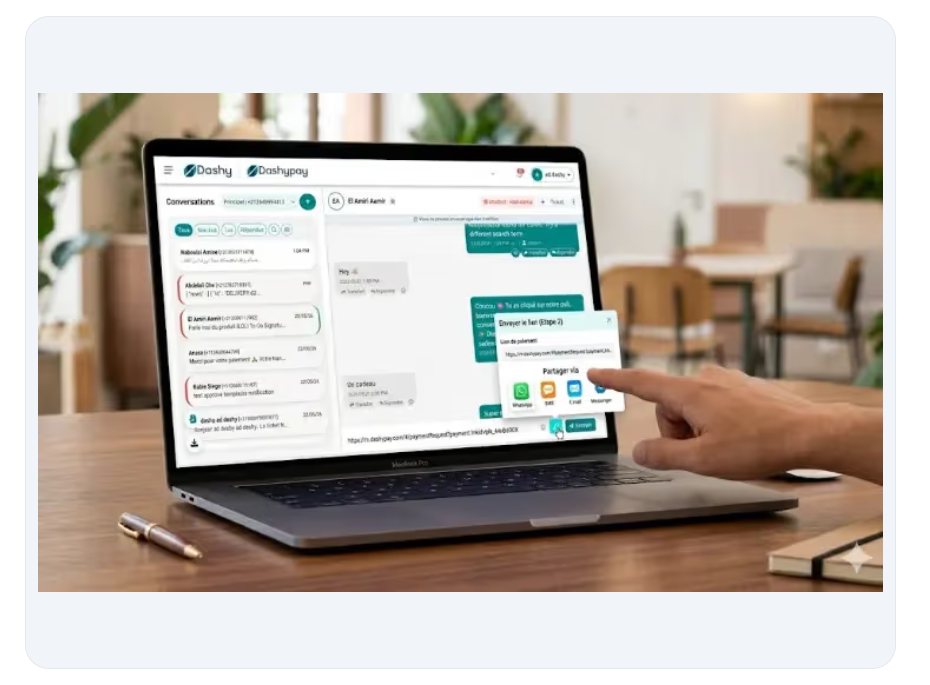
Step 3: Share on WhatsApp
Copy the link into the customer thread immediately after order confirmation—when intent is highest.

Step 4: Track and confirm
Monitor status in real time and send a thank-you message with next steps (delivery, appointment, etc.).
Transaction security
WhatsApp does not process card data. DashyPay hosts the checkout page with PCI-DSS and 3D Secure. Never ask customers to share card numbers in chat—always use a link.
DashyPay operates under Bank Al-Maghrib requirements. See regulatory updates on the official Bank Al-Maghrib site.
Best practices
- Reply quickly—delayed responses cool purchase intent.
- Personalize every message with name and order details.
- Send the link right after verbal or written confirmation.
- Automate a 24-hour reminder for unpaid links.
- Always confirm payment with a short thank-you note.
Who should use WhatsApp payment in Morocco?
WhatsApp payment Morocco fits Instagram boutiques, home caterers, beauty services, training providers, and B2B suppliers invoicing on chat. Any business that already closes deals on WhatsApp can add secure card collection without building a full store.
Combine with payment links for deposits, balances, and recurring clients. Track every link in one dashboard to reconcile cash flow weekly.
Common mistakes to avoid
- Asking for card numbers directly in chat (never do this).
- Sending links without amount or order context.
- Waiting days before following up on unpaid links.
- Using non-licensed tools without 3D Secure.
Conclusion
WhatsApp payment Morocco turns your main communication channel into a sales and collection engine. Discover DashyPay for WhatsApp, explore payment links, and read our online payment guide.
About the author

Share this article
FAQ
How does WhatsApp payment work?
You generate a secure payment link, send it in the WhatsApp conversation, and the customer clicks to pay by card. Confirmation is instant.
Why use WhatsApp to collect payments?
WhatsApp is Moroccans' preferred channel, with read rates estimated between 60% and 98% depending on message type, well above email. In-chat payment removes friction.
Is WhatsApp payment legal in Morocco?
Yes, as long as the final transaction is processed by a licensed payment operator. WhatsApp serves as a communication channel, not a banking processor.
What types of businesses can use WhatsApp payment?
Restaurants, online shops, delivery services, agencies, coaches, and any business that takes orders by message. It's especially useful for SMEs without a website.
How do I secure a WhatsApp payment?
Always use a secure payment link redirecting to a PCI-DSS compliant page. Never ask for card details directly in the chat.
Can I automate reminders on WhatsApp?
Yes, with DashyPay you can schedule automatic reminders for pending payments, sent directly via WhatsApp.
Can customers pay inside WhatsApp without a link?
Not for standard card payments. They must open a secure checkout page via your payment link from a licensed operator.
Is WhatsApp payment suitable for freelancers in Morocco?
Yes. It is ideal for project billing, deposits, and one-off services without a website or physical terminal.
How does WhatsApp payment fit Morocco fintech in 2026?
It anchors WhatsApp-commerce: social selling plus digital collection, aligned with mobile money and automation trends.


