

Online Payment Morocco 2026: Complete Business Guide
Learn how to set up secure online payment for your business in Morocco. Complete guide with best practices, security tips, and solutions for 2026.
Online payment in Morocco is experiencing unprecedented growth. In 2026, Moroccan consumers expect to complete purchases in just a few clicks, whether on an e-commerce site, through a link received on WhatsApp, or directly from an electronic invoice. For businesses, offering a secure online payment system is no longer a luxury reserved for large retailers: it is a commercial imperative for SMEs, merchants, restaurants, and freelancers.
Yet many entrepreneurs still hesitate to take the plunge. Technical concerns, regulatory fears, and choosing the right solution: the barriers are numerous. This complete guide explains everything you need to know about online payment in Morocco in 2026, from fundamentals to best practices, including security and legal compliance.
Whether you are a restaurant owner, online shop manager, consultant, or delivery service, you will find here the keys to implementing a secure electronic payment solution adapted to your business and your customers.
What is online payment in Morocco?
Online payment refers to all methods allowing a customer to pay for a purchase or service remotely, via the Internet, without physical cash exchange. In Morocco, this concept encompasses several channels: card payment on an e-commerce site, a payment link shared on WhatsApp, or integrated solutions in mobile applications.
Available online payment methods
The Moroccan market now offers a diversity of solutions adapted to different business profiles:
- Card payment: the most widespread, accepted by almost all solutions. Visa and Mastercard cards dominate the market.
- Payment link: ideal for businesses without a website. You generate a secure URL that you share via WhatsApp, SMS, or email.
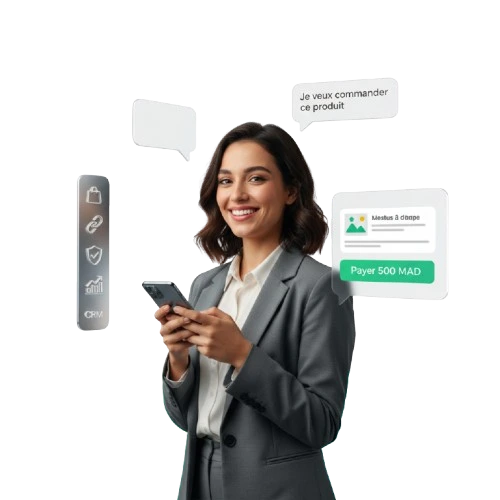
- WhatsApp payment: combines the payment link with Moroccans' preferred communication channel. Very effective for SMEs and social media sellers.
- Digital wallets: although less widespread than in other African countries, solutions like Orange Money and Maroc Telecom are gaining ground, especially for micro-payments.
How does online payment work technically?
Behind every online transaction lies a complex yet harmonized technical ecosystem. The process generally follows four steps:
- Initiation: the customer clicks "pay" and is redirected to a secure payment page.
- Authentication: the card is verified by the 3D Secure system, which may request an SMS code from the customer.
- Authorization: the buyer's bank checks solvency and approves or declines the transaction.
- Capture: funds are reserved then transferred to the merchant's account according to the acquirer's timeline.
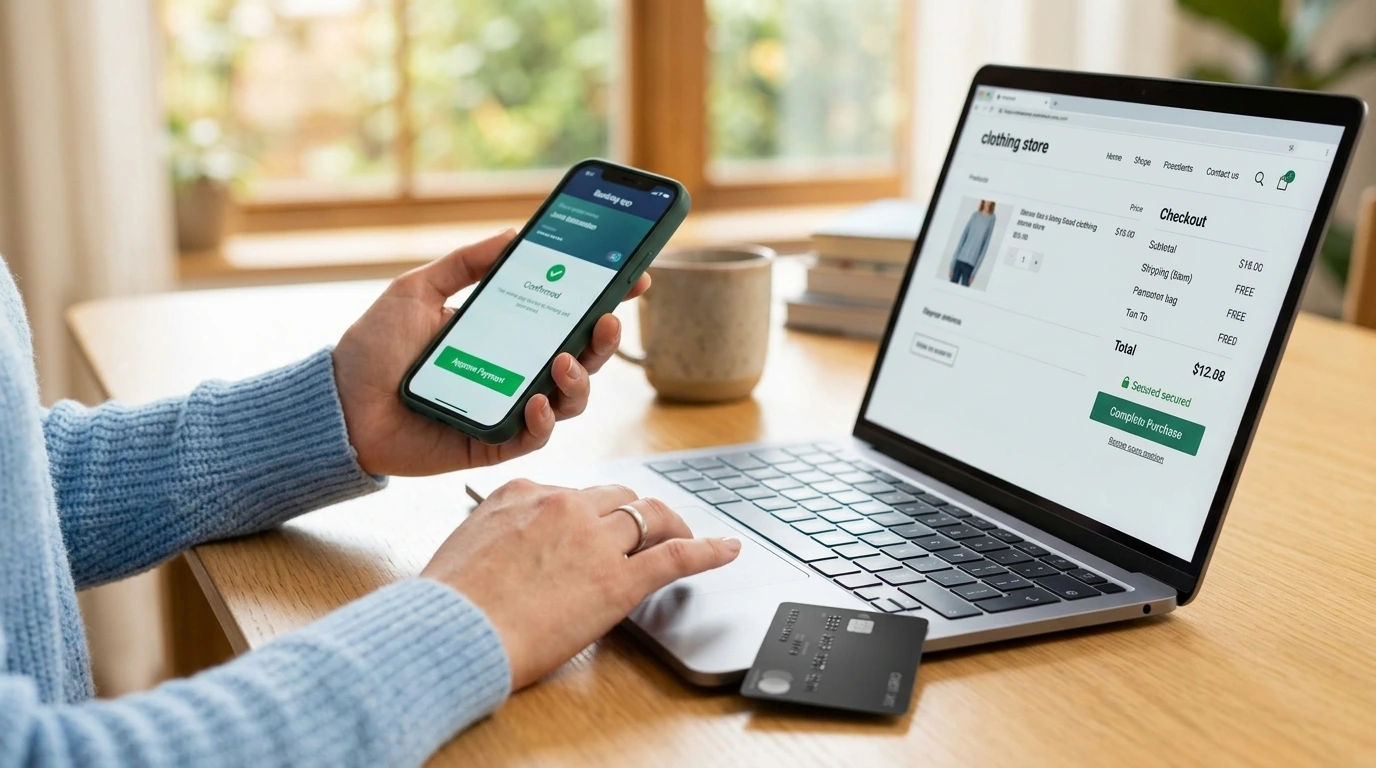
This process is coordinated by the payment gateway, the technical intermediary between your site and the banking system. See our guides on DashyPay and payment links in Morocco.
The specific Moroccan context
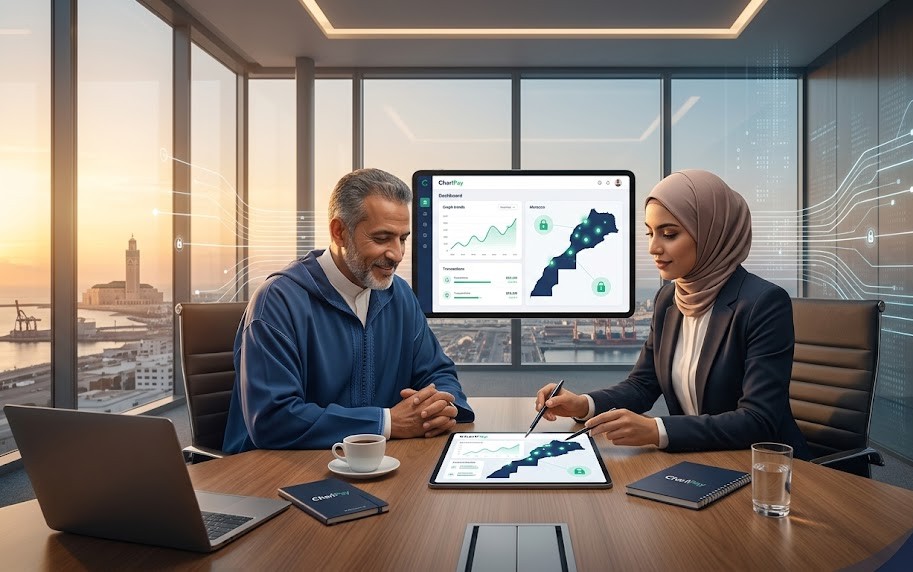
Morocco has a solid banking infrastructure and an active regulator, Bank Al-Maghrib, which supervises payment operators. The Moroccan interbank card network plays a central role in card interoperability. This structure offers a secure framework for digital payment development, while imposing compliance requirements that businesses must respect.
Meanwhile, massive smartphone adoption is transforming consumer expectations in Morocco. They want to pay quickly, from their phones, without friction. This evolution pushes businesses to rethink their customer experience around digital payment.
Why online payments are essential in 2026
In 2026, online payment in Morocco is no longer optional: it is a decisive differentiator. Businesses that do not offer a digital solution risk significant customer loss, especially among younger generations and urban populations.
Evolution of Moroccan consumer expectations
Consumption habits have profoundly changed. Today, a typical Moroccan customer:
- Discovers products on Instagram or Facebook
- Orders via WhatsApp or a mobile site
- Expects to pay online without traveling
- Demands immediate confirmation and a digital receipt
This behavior, amplified by the pandemic and the spread of digital commerce, has become permanently entrenched.
Concrete benefits for businesses
Adopting online payment for Moroccan businesses brings measurable benefits:
- Faster collection: no more payment delays linked to transfers or checks. The customer pays immediately, improving your cash flow.
- Reduced unpaid invoices: by requesting a deposit or full payment at order, you drastically reduce cancellation risk.
- Geographic expansion: you can sell to customers in other Moroccan cities without physical constraints.
- Professional image: a secure payment page reassures customers and strengthens your credibility.
- Data and analytics: you track every transaction, identify your best sales channels, and optimize your commercial strategy.
The most impacted sectors
Certain sectors particularly benefit from digital payment:
- E-commerce: obviously, but also Instagram shops without their own website.
- Restaurants and delivery: collecting before delivery reduces last-minute cancellations.
- Professional services: consultants, coaches, marketing agencies billing remote services.
- Events and training: online payment for registrations to secure spots.
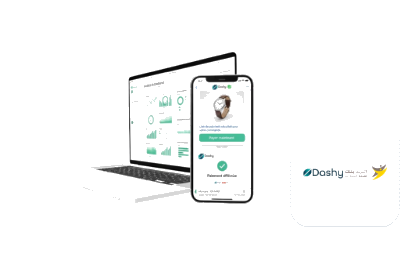
Explore our guides on payment automation and the DashyPay solution.
Best practices for online payment
Implementing an online payment system is not just about choosing an operator. It is about building a smooth, secure, and compliant experience that maximizes conversions.
Optimize user experience
Each additional step between the customer and payment confirmation increases abandonment risk. Here are the golden rules:
- Mobile-first: over 70% of online payments in Morocco happen via smartphone. Your payment page must be perfectly responsive.
- Minimize fields: only ask for strictly necessary information. A long form discourages.
- Display security: clearly mention PCI-DSS certification and display security logos.
- Confirm immediately: an instant confirmation message reassures the customer and closes the transaction positively.
- Offer multiple options: bank card, and if possible, digital wallet to broaden your customer base.
Manage transactions and tracking
A good online business payment in Morocco does not end at the "pay" click. Post-transaction tracking is equally important:
- Centralize all transactions in a single dashboard.
- Quickly identify failed payments and follow up with concerned customers.
- Export data for accounting and tax declaration.
- Set up automatic reminders for unpaid invoices.
Communicate with the customer
Transparency is essential to reassure Moroccan customers, who are sometimes still wary of digital payment:
- Clearly explain the payment process before it begins.
- Send a detailed receipt by email and/or WhatsApp.
- Offer an accessible support number in case of problems.
- Be explicit about delivery or service execution timelines after payment.
Security and legal compliance in Morocco
Security is the primary selection criterion for both businesses and consumers. A security incident can not only cause financial losses but also irreparably damage your brand reputation.
Bank Al-Maghrib's regulatory framework
Bank Al-Maghrib, Morocco's central bank, strictly oversees payment activities. Any operator offering secure electronic payment services must obtain prior authorization and comply with a set of rules:
- Anti-money laundering and counter-terrorism financing: operators must implement identity verification (KYC) procedures and transaction monitoring.
- Customer data protection: compliance with Law 09-08 on the protection of personal data.
- Financial flow security: data encryption, strong transaction authentication.
Working with an operator approved by Bank Al-Maghrib is therefore imperative.
Technical standards: PCI-DSS and 3D Secure
Beyond the local framework, international standards apply:
- PCI-DSS (Payment Card Industry Data Security Standard): mandatory set of standards for any entity storing, processing, or transmitting card data.
- 3D Secure: authentication protocol that adds a security layer to online payments. The customer must validate the transaction via an SMS code, considerably reducing fraud.
Ensure your online payment Morocco solution respects both standards.
Cybersecurity best practices for SMEs
Even if you rely on an operator for technology, you have a role to play in security:
- Never store card numbers on your own servers.
- Use strong passwords and two-factor authentication to access your dashboard.
- Train your teams to recognize phishing attempts.
- Regularly back up your transactional data.
- Monitor your transactions to detect abnormal behavior.
How to choose the right solution
Faced with diverse offerings, choosing an online payment solution for Moroccan businesses can seem complex. Here is a simple and pragmatic decision framework.
Identify your real needs
Before comparing offers, ask yourself the right questions:
- What is my monthly transaction volume? A small shop does not have the same needs as a high-traffic e-commerce platform.
- What are my sales channels? Website, WhatsApp, social media, recurring billing?
- What is my technical level? Do you have a developer to integrate an API, or do you need a turnkey solution?
- What settlement timeline can I accept? T+1, T+3, T+7? This directly impacts your cash flow.
Essential comparison criteria
Once your needs are clear, compare solutions on these criteria:
- Total cost: fixed subscription + per-transaction commission + setup fees. Watch out for hidden fees!
- Ease of integration: documented API, e-commerce plugins, or simple link generation?
- Customer support: is it available in French and Arabic? Responsive? Based in Morocco?
- Advanced features: automatic reminders, multi-user, custom reports, accounting integration.
- Reputation and compliance: is the operator approved by Bank Al-Maghrib? Does it respect PCI-DSS?
Why SMEs choose DashyPay
DashyPay was specifically designed to meet the needs of Moroccan SMEs. With no fixed subscription, an interface in French and Arabic, and responsive local support, DashyPay combines:
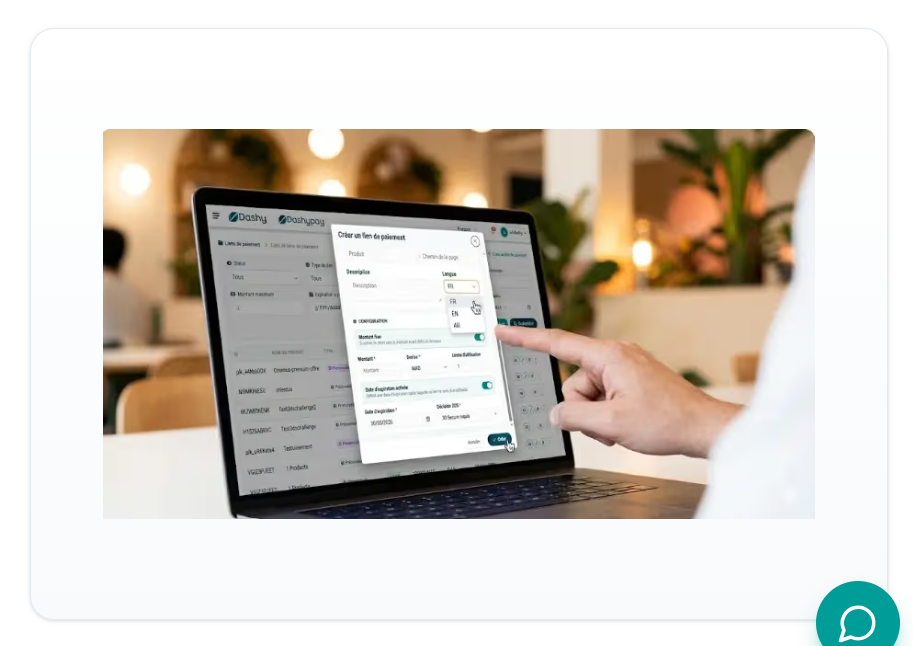
- Instant creation of secure payment links
- Collection via WhatsApp
- Real-time tracking dashboard
- Automatic payment reminders
- Full compliance with Moroccan regulation
Whether you sell physical products, services, or training, DashyPay adapts to your workflow without technical complexity.
Conclusion
Online payment in Morocco has entered a new era in 2026. Businesses that invest today in an adapted digital solution gain a lasting competitive advantage: faster collection, fewer unpaid invoices, enhanced professional image, and optimized customer experience.
This guide has presented the fundamentals of secure electronic payment, best practices to adopt, the legal framework to respect, and criteria for choosing your solution. It is now time to take action.
Ready to modernize your collections? Discover DashyPay's online payment solution or request a personalized demonstration to see how it fits your business.
Share this article
FAQ
How do I accept online payments in Morocco?
Use a payment platform that offers secure payment links shared via WhatsApp, email, or SMS. Create the link, send it to the customer, and collect automatically.
Can I receive payments without a website in Morocco?
Yes. A Moroccan payment link lets you collect without an e-commerce store. Simply share the secure URL on your usual sales channels.
Is WhatsApp payment secure?
Yes, when it redirects to a secure checkout page compliant with PCI-DSS and 3D Secure standards. The customer enters card details on an encrypted page, not inside WhatsApp.
What online payment solution is best for Moroccan SMEs?
A platform combining payment links, real-time tracking, and automated reminders is usually the most effective. It reduces unpaid invoices and improves cash flow.
What are the fees for online payment in Morocco?
Fees vary by provider: Traditional gateways charge a monthly subscription plus per-transaction commission, while fintechs often offer a no-subscription model with pay-per-transaction pricing.
Is electronic payment legal in Morocco?
Yes, provided it complies with Bank Al-Maghrib regulations and anti-money laundering legislation. Choose a licensed operator.
How long does it take to set up online payment?
With payment links, you can collect the same day. Full e-commerce integration may take a few days depending on your site and developer.
What is the difference between a payment link and an e-commerce gateway?
Links work without a website (WhatsApp, social). Gateways integrate with a cart. Both use the same secure bank flow (3D Secure, PCI-DSS).
Do Moroccan customers trust online payment?
Yes, when the page clearly shows security (PCI-DSS, 3D Secure), amount, and timelines. Transparency and instant receipts build trust.
Do I need a business account to collect online?
Yes. Licensed operators require a merchant profile (KYC) to meet Moroccan anti-fraud and compliance rules.


